 Sofia Marchetti
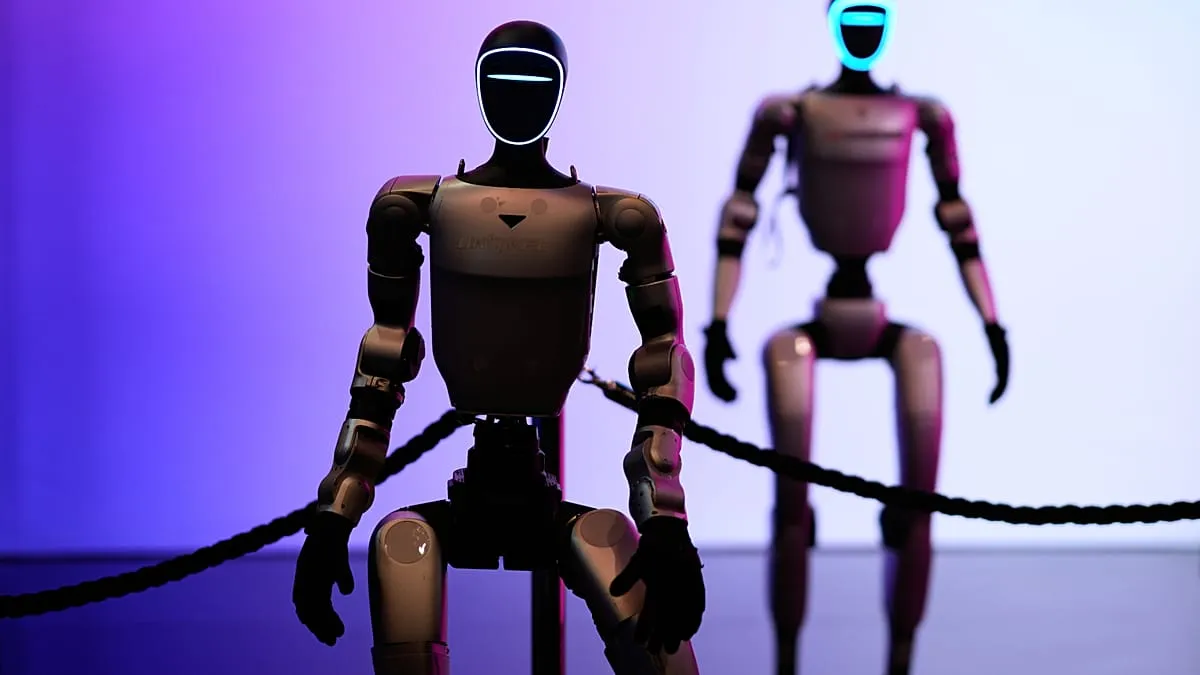
Campaigners say the world is nearing an "Oppenheimer moment" over weapons that can pick and hit targets without a human in the loop.
Diplomats in Geneva were working against the clock on Friday after Russia, above all, stalled five days of hard talks on whether to begin negotiating rules for lethal autonomous weapons.

The talks, held at the UN's Review Conference of the Convention on Conventional Weapons (CCW), were set to wrap up on Friday evening. By mid-afternoon, states still had not found a way out of the impasse.
Militaries are looking to artificial intelligence (AI) to spot and hit targets faster and with more precision.
Once switched on, lethal autonomous weapons systems (LAWS) can choose and strike targets with no human involvement at all. Stop Killer Robots, a global coalition of more than 300 organisations, says such systems have already been tested or deployed, including in the war in Ukraine.
Critics argue the weapons make indiscriminate strikes more likely, blur who is accountable, and may be used in ways that break the laws of war.
A split room
The 128 states party to the CCW spent the week weighing whether to launch negotiations — and, if so, on what terms and over what timeline. Any decision requires full consensus.
Most countries back a legally binding agreement. But states that hold the technology, the United States and Russia among them, are reluctant to have their hands tied.
Timing is another fault line. The International Committee of the Red Cross and various non-governmental organisations (NGOs) want negotiations to take one year, while Washington has proposed five.
France is among those pushing a mix of legally binding and non-binding measures.
"On the final day of talks, a minority of states continue to block progress," said Anna Hehir, head of military AI governance at the Future of Life Institute.
Russia under scrutiny
When the conference opened on Monday, Russia set off a procedural standoff by objecting to observers joining the debate, including the European Union and civil society organisations. That pushed states into continuing their discussions in an informal format.
On Thursday, Russia repeatedly demanded changes to the draft final report, including to passages unrelated to the core issues.
Even so, one diplomat told AFP, speaking anonymously, that the week had brought the camps closer together.
"We're very close to consensus on the need to negotiate something. There is only one delegation that is actively opposing a process that is focused on negotiations."
Oppenheimer moment
Magnus Lovold, of the Lex International philanthropic fund, said autonomous weapons were reaching an "Oppenheimer moment" — a nod to Robert Oppenheimer, the physicist who brought the world into the nuclear age.
"We’re really at the brink now where it may be very much more difficult in the future to actually get these rules that we need," Lovold said on the sidelines of the talks.
UN Secretary-General Antonio Guterres told the conference on Monday to "take action to prevent the use and spread of these merciless weapons".
"We must never stop shielding civilians from the carnage and devastation of armed conflict," Guterres said.
Read more
Revisiting Brexit is the 'democratic' thing to do, says MEP

Robotaxis and delivery drones: China’s autonomous vehicle race

TikTok rolls out deepfake detection tool for public figures
- AI
- Artificial intelligence
- War crimes
- Russia
- Drones
- United States
Source: euronews.com