 Lucas Moreau
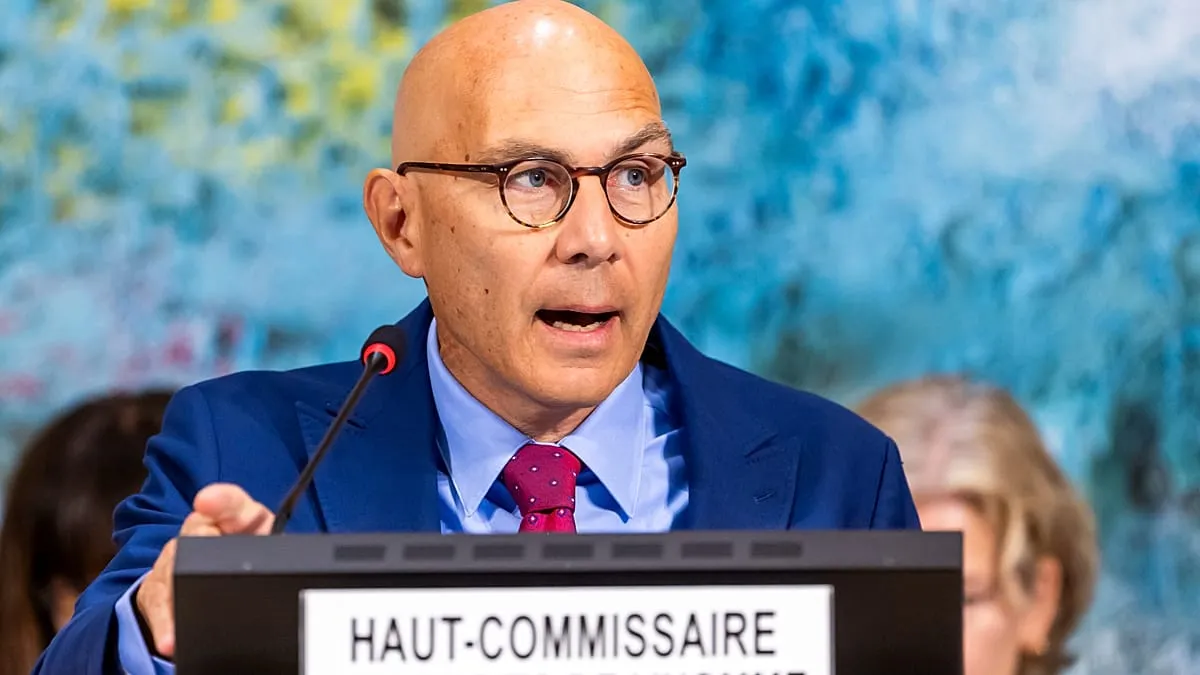
UN human rights chief Volker Türk says AI may sound futuristic, but the way it is run rests on a very old story about who holds power.
Artificial intelligence is being governed much as medieval rulers governed their realms, the UN's top human rights official warned on Thursday, with a small group of tech magnates holding most of the power.

Volker Türk, the UN high commissioner for human rights, told the RightsX summit in Geneva that the AI story sounds futuristic but is really an old narrative about power.
"A handful of men still control much of the world's AI computing power, data and infrastructure. And we still have no common rules to pace or steer AI development," he said.
Five technology companies hold more than 70% of global AI computing capacity, Türk noted — a glaring democratic deficit.
"We have the technology of the future governed in an almost mediaeval way: by a select few, with virtually no checks, no balances, no participation, and no accountability," he said.
"History has taught us: with this kind of power, the rights and freedoms of ordinary people are the first to suffer."
Türk repeated his call for AI rules built around human rights, arguing the technology increasingly shapes people's lives.
Often that happens without their knowledge, he warned, and it can warp public debate in "subtle, insidious ways".
Biased algorithms, meanwhile, can churn out injustice on an industrial scale, he said.
'Civilisational collapse'
"Our transport, food and healthcare are increasingly digitised. We may not be far from the day when AI can cut off the critical infrastructure of entire communities or countries, either on its own or in the wrong hands," Türk warned.
"When people discuss the chances of civilisational collapse because of AI, we need to ask: who decides what chances we take?"
He struck an optimistic note: people will eventually push back against unchecked power, and the democratic deficit will turn into a deficit of trust.
He pointed to young people who are already logging off to take back more control over their lives.
AI's gains should be spread fairly, Türk said. That takes goodwill from tech companies — and regulation and accountability too.
He said he had written to leading AI companies, pressing them to put effective safeguards in place "before it is too late".
A bottle of milk cannot reach a shop without layers of testing, rules and regulations, Türk observed.
Given AI's potential for harm, "it's a no-brainer that you need some form of regulation", he said.
As for how models are trained, he suggested handing AI the Universal Declaration of Human Rights "as the task".
Read more
Russia stalls UN bid to regulate AI 'killer robots' as deadline looms
TikTok rolls out deepfake detection tool for public figures

Hackers leak data on 16,000 Visa, Mastercard & JPMorgan customers
- AI
- Artificial intelligence
- United Nations
- Anthropic
- Open AI
- Big Tech
Source: euronews.com