 Sofia Marchetti
French lawmakers threw out the first section of the 2027 budget bill. Now the country is bracing for a nationwide walkout.
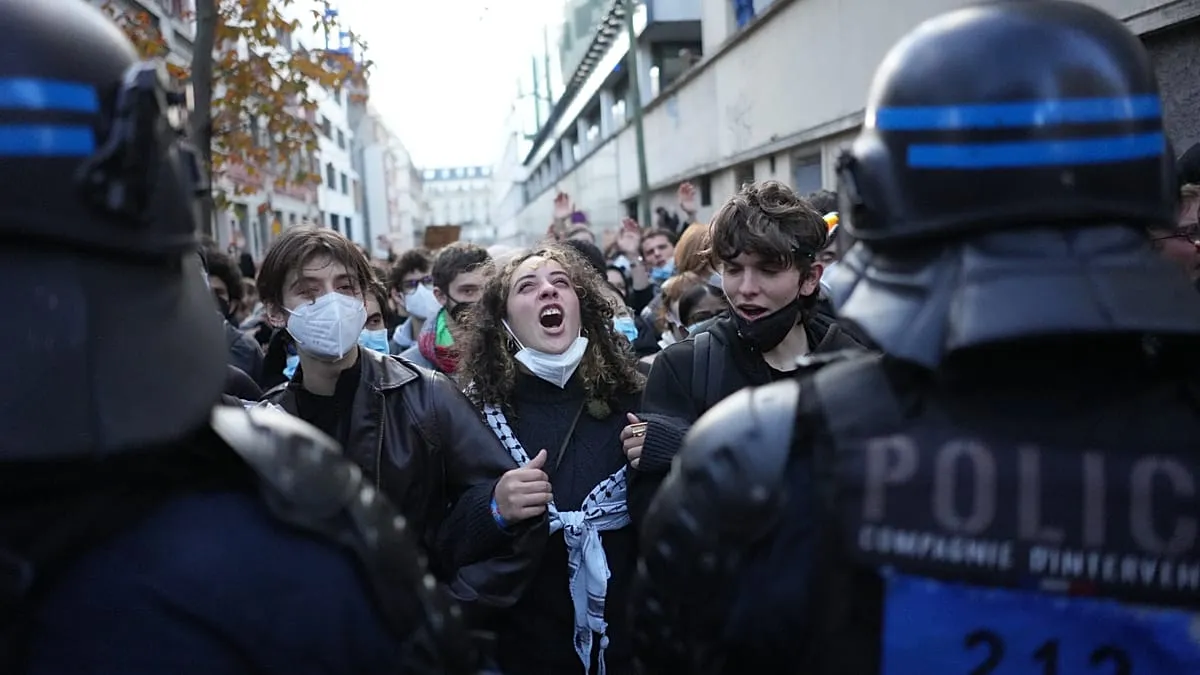
Trade unions, the yellow vest movement, students and workers from a range of sectors are expected to bring hundreds of thousands of people onto the streets of France on Thursday for a national day of strikes and demonstrations.
Health and education staff, air traffic controllers, rail and dock workers and postal employees are all expected to join them.
The mobilisation follows Wednesday's vote in which lawmakers from across the political spectrum rejected the opening part of the 2027 budget bill. The government's original proposal now heads to the Senate, where a vote is set for 9 December.
A parliamentary committee will then try to find a compromise before the legislation goes back to the National Assembly.
France has already seen weeks of protest. Students started demonstrating in mid-September over packed classrooms, a shortage of teachers and problems with university admissions.
The movement has widened since then. Trade unions have taken up the students' complaints and marched against the cost of living crisis and rising fuel prices.
Interior Minister Laurent Nuñez said more than 70,000 law enforcement officers would be deployed on Thursday. He said their "primary mission" was to make sure demonstrations passed off "peacefully" and "without any incidents".
He said intelligence services had picked up "considerable interest" from the far left and from violent protest groups, which he said had "several possible aims: taking part in them to provoke unrest; organising unauthorised marches; and carrying out looting and vandalism targeting businesses or public buildings."
Authorities have placed conditions on the route unions proposed for the Paris march and approved a different one instead. The move comes as the government tightens security following the violence of 17-18 October, when largely peaceful demonstrations were marred by clashes and looting.
Trade unions and rights groups, for their part, have condemned what they call excessive policing and "authoritarian" measures designed to restrict protests. French police have also faced criticism over allegations of excessive force against demonstrators.
The budget fight goes on
With elections due in April, less than six months away, President Emmanuel Macron's government is trying to get its 2027 budget through a hung parliament. The plan contains a series of austerity measures, set against a major public debt and deficit crisis.
Marine Le Pen's far-right National Rally currently leads the polls, with Jean-Luc Mélenchon, leader of the hard-left France Unbowed party, in second place.
France's economic position has unsettled financial markets and drawn pressure from the European Union. Major trade unions have attacked the budget, arguing in a statement issued on Thursday that it "exacerbates the situation by targeting the most vulnerable and those who are ill, freezing social benefits and undermining the protective role of the social security system".
On 26 October, the government set out a package of education reforms in response to the student unrest. It includes €4 billion in preferential rate loans for school renovations and 15,000 extra university places between 2027 and 2028.
Student unions called the measures insufficient and "little more than window dressing." They had asked for €10 billion in direct investment in school facilities, and some unions want 250,000 additional university places.
Soaring energy prices have added to public anger, amid a global fuel-supply shock driven by the conflict in the Middle East and the closure of the Strait of Hormuz. The crisis has also led French lawmakers to criticise energy companies over record profits while households face rising costs.
On 1 November, the government began releasing 10 million barrels of diesel from its strategic reserves. It later pointed to a fall in fuel prices at thousands of petrol stations.
Economy Minister Roland Lescure told broadcaster BFMTV on Wednesday that the price of diesel had dropped by an average of 15 cents per litre, and by 20 cents per litre at more than 3,000 filling stations. France has more than 10,000 stations in total, according to the French Union of Petroleum Industries and Mobility (UFIP).
Source: euronews.com