 Elena Kowalska

Nvidia's CEO exit, AI bubble worries and America's ballooning debt dominated a busy closing day at Lisbon's Web Summit, where a Euronews-moderated panel cautioned that trouble in public debt markets could spark the next financial meltdown.
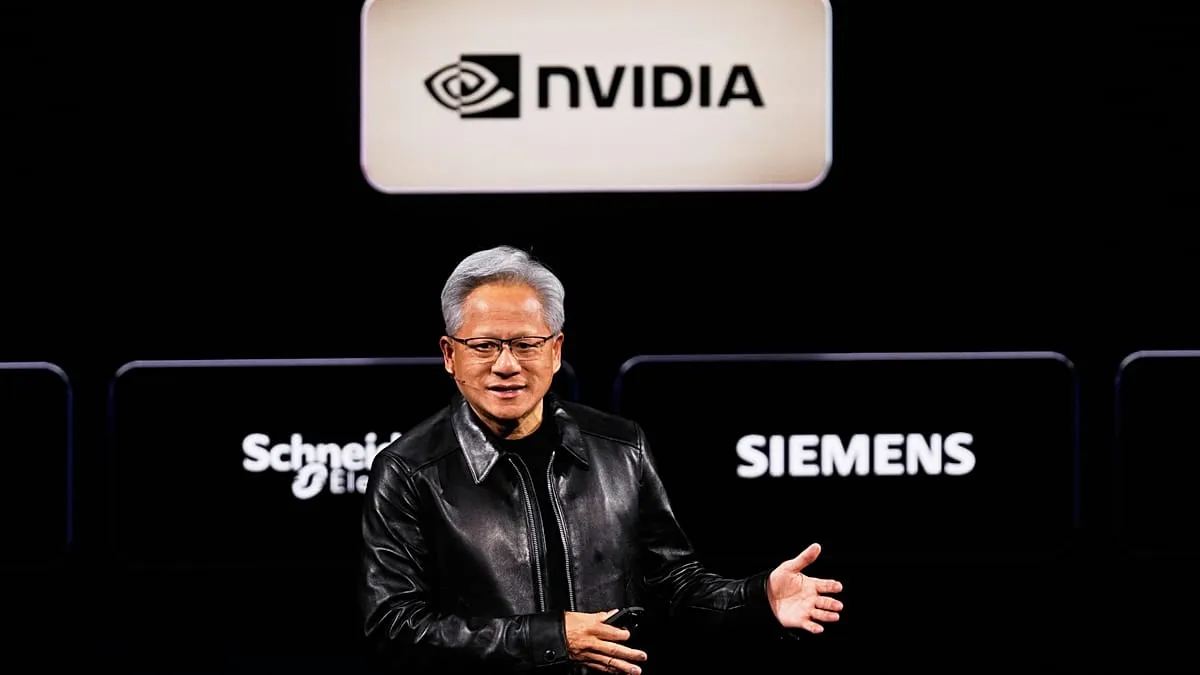
Jensen Huang's abrupt departure as chief executive of chipmaker Nvidia, fears of an AI bubble and rising US debt took centre stage on Thursday as the Web Summit in Lisbon — one of Europe's biggest tech gatherings — wrapped up before packed rooms.
Panellists speaking in a session moderated by Euronews warned that public debt markets might be the trigger for the next financial crisis.
The panel brought together Adam Kobeissi, founder and editor-in-chief of The Kobeissi Letter, a capital markets publication with millions of followers, and economist James Galbraith, a professor at the University of Texas at Austin.
Their session was one of many crammed into Thursday after Wednesday's programme was scrapped on the Portuguese government's advice, which had declared a state of emergency as Storm Charles approached.
In the end the storm missed Lisbon, which saw only heavy rain and minor flooding.
Huang's exit is "a net negative for investors"
Huang resigned on Thursday following disclosures that he had two extramarital affairs.
US intelligence reportedly suspects one of the women of spying for China, a claim Beijing denies. Chief financial officer Colette Kress has taken over as interim CEO while the board hunts for a permanent replacement.
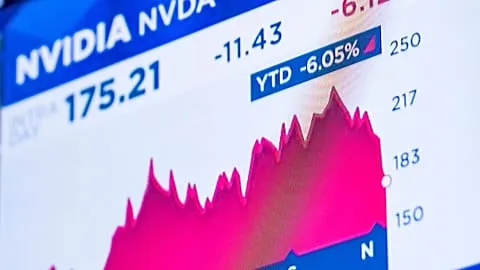
Nvidia shares fell about 15% when trading opened on Thursday but have since recovered some ground, sitting a little over 5% lower on the day at roughly $164 per share at the time of writing.
That leaves the stock more than 30% below the all-time high of $243 it reached on Monday 5 October.
Kobeissi argued Huang should have stayed on, saying the departure "will be a net negative for investors" over the coming couple of years, though he kept an overall bullish view on Nvidia.
He also doubted Huang's exit would weigh on next week's market debut of Anthropic, the AI company behind the Claude models, which is chasing a valuation of up to $1.4 trillion (€1.25tn).
Nvidia is one of seven tech firms that have committed to buying Anthropic shares at the offer price.
AI, China, US debt and midterm elections
Professor Galbraith said there was a strong chance Chinese technology would eventually undercut Nvidia's, raising awkward questions about the hundreds of billions Microsoft, Alphabet, Amazon, Meta and other hyperscalers are currently sinking into AI infrastructure.
He described the global economy as a contest between two systems.
America finds it easy to raise private capital quickly but moves slowly on policy and decision-making, he explained, whereas China can centralise research, technological development and deployment, and step directly into its economy.
On that basis, Galbraith said he "would tentatively bet on China" to win the AI race, and perhaps to become the world's largest economy in the coming decades.
Beyond the AI boom, the panel flagged public debt markets as a major worry.
Kobeissi warned that one in five dollars the US government spends goes on interest payments, "not even to pay down the debt". US Treasury data shows Washington spent $1.1 trillion (€988bn) on net interest in the fiscal year to September, or 19% of its revenue.
"US debt to GDP ratio is at World War II levels and there has not been a technical recession since the COVID-19 pandemic," Kobeissi said, adding that "the debt market has been screaming that it will be in a higher for longer environment in the foreseeable future," meaning interest rates are set to stay high.
"On the current path the US is on, there is a 100% chance of bankruptcy," he warned, adding that central banks cannot bring down interest rates in the current environment.
Still, "we are not in an imminent 2008 situation but the trends 10 or 20 years out are very concerning," Kobeissi said, although he remains "a huge bull" on the US, citing its resilient economy and accelerating innovation.
Professor Galbraith recalled how, during the COVID-19 pandemic, US President Donald Trump and a Democratic-controlled House agreed on relief to rescue the markets, but warned that the same cohesion might be lacking now.
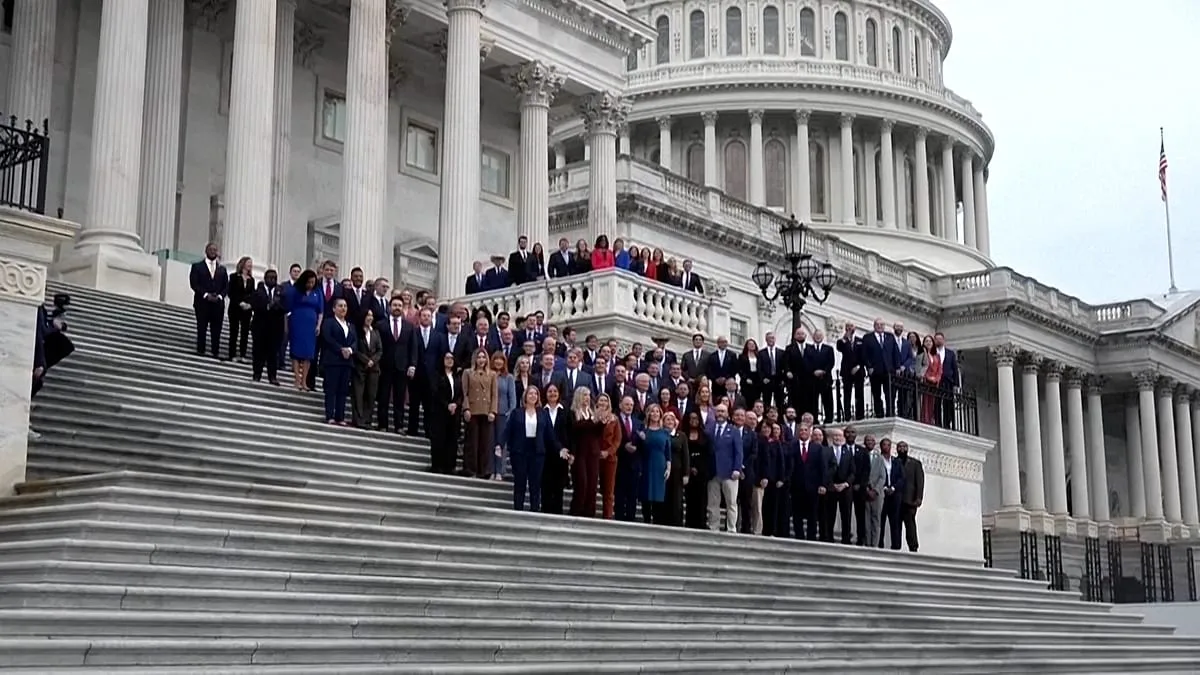
In last week's US midterm elections, Democrats won 255 House seats to the Republicans' 169, according to AP's count as of the time of writing. Several US states are still tabulating ballots and Democrats can still flip the Alaska Senate seat and multiple of the 16 uncalled House seats.
Asked for a prediction, Professor Galbraith said that "the nature of financial crises is that we cannot foresee them," though he saw concerning signs.
Read more


Source: euronews.com